

Welcome to New Jersey Insight, a periodic newsletter to make law and politics (through a New Jersey lens) more accessible.
Decision making is both a science and an art. A science because following a rigorous pre-decision process tends to improves the quality of the decision. For example, gathering the pertinent facts, considering the different angles and implications, and soliciting a variety of perspectives are invaluable. And during the process, keep an open mind and listen. I mean truly listen and understand the different views. An informed decision follows.
Decision making is also an art because even if you adhere to a rigorous process, an obvious and “right” decision can still be elusive. In its absence, what’s left is judgment: the capacity to make sound decisions in circumstances that are complex, ambiguous, and when a “clear” answer is not at all apparent.
I’ve made my fair share of tough decisions over the years. And I’ve been in the room when other executives underwent their process to arrive at the best decision. Through it all, I’ve found that three themes repeatedly arise, especially in high-stakes moments. Recently, these themes were on full display when New Jersey Governor Mikie Sherrill faced a high-stakes moment of her own—the growing protests at Delaney Hall and whether to deploy the New Jersey State Police to restore a semblance of calm.
Ultimately, she ordered the deployment, but not without consequence.
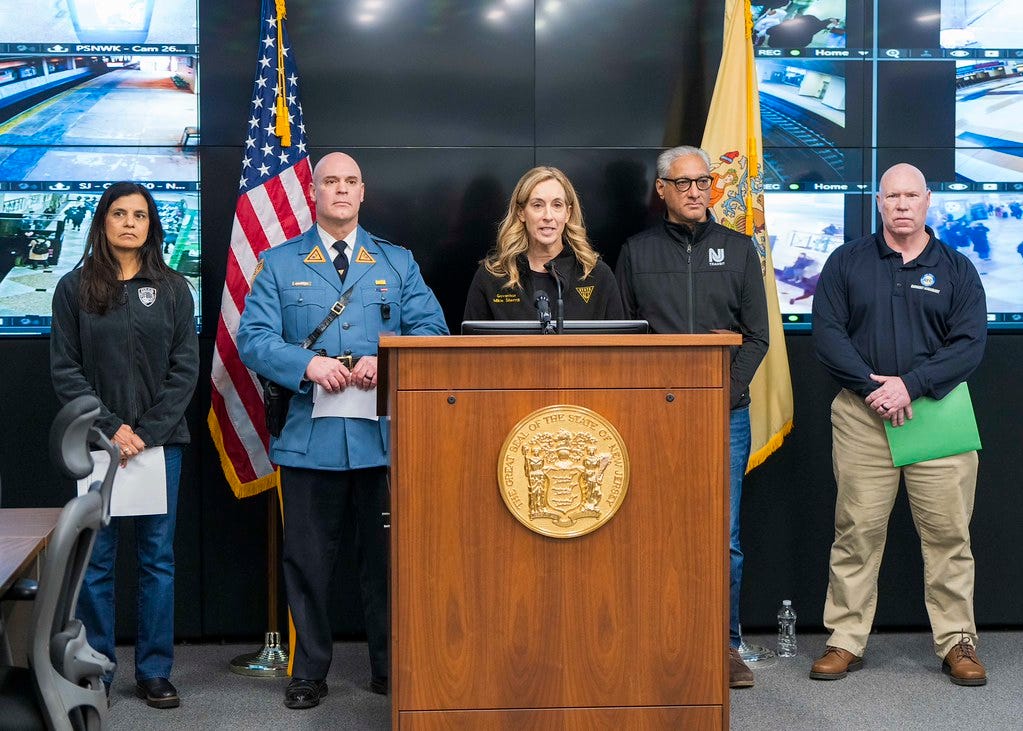
The first theme: the available facts are constantly evolving and uncertain. For Governor Sherrill, she needed to address both the protection of the protesters at Delaney Hall and the escalating pressure from the federal government. In such a large protest, developments were constantly changing. Anxiety was high, and the possibility of violence became a distinct probability. On the other side, the federal government’s frustration was also running high. ICE agents and protesters clashed, and the White House publicly threatened to deploy “tactical units” to quell the unrest at Delaney Hall. Behind that threat loomed a troubling backdrop: over the span of this administration, we have seen many reports of abuse committed by federal enforcement agents.
In these circumstances, Governor Sherrill had a decision to make based on imperfect information. She could stand aside, let the situation play out, and risk federal intervention—and the resulting consequences. Or the Governor could intervene and direct law enforcement to place contours around the protest, avoiding federal involvement. Neither choice seemed particularly attractive in the moment. Advocates have characterized the protests as largely peaceful, while online reports indicated continued clashes. Either way, the circumstances offered little guarantees of a positive outcome.
Second, any decision made would likely be met with criticism. If Governor Sherrill did nothing, the White House might have carried through with their public threat, and consequences might have been disastrous. The Governor would have been criticized for failing to protect the protesters. On the other hand, intervene and be accused of escalating a situation needlessly.
Here, we know that the latter occurred. Newark Mayor Ras Baraka criticized the State Police deployment, describing the agency as a “sword—if you’re going to use them, you have to expect people to get cut.” The ACLU of New Jersey condemned the State Police response as “unnecessary...to free speech and the right to peaceful protest.” It described the protests as “overwhelmingly peaceful” and argued that the state must not “mimic the dangerous and overly militarized tactics of the federal government.”
Lastly, the time to make the decision is incredibly short. Developments are moving fast. Advice and demands are coming from all corners. A tight deadline is approaching fast, and whether it was an arbitrary or manufactured deadline was irrelevant. A decision needs to be made, and all eyes are on the decision-maker.
Governor Sherrill worked on a demanding timeline. The hunger strike at Delaney Hall occurred over the Memorial Day weekend, which led to the protests. On Memorial Day, the federal government denied the Governor entry to Delaney Hall. Clashes occurred between federal agents and protesters, and Sen. Andy Kim experienced the aftereffects of ICE’s use of pepper spray. The federal government denied the existence of a hunger strike and any maltreatment, while members of Congress relayed several reports of poor and inhumane conditions. Escalation ensued, and with the White House threatening a federal tactical deployment, the time came to act.
Before the week ended, the Governor made the call. Refusing to “give ICE the pretext to expand operations” in New Jersey, she announced a designated protest area outside of Delaney Hall. The federal government agreed to step back from the perimeter. Unfortunately, violence erupted the night after the announcement, and state law enforcement responded—in ways that advocates said were indistinguishable from ICE itself.
So often, the result of a difficult decision can be unsatisfying. Here, the Governor shared her firm belief that her decision was the right one based on the circumstances. Avoiding federal intervention was her paramount concern. Even still, the circumstances at Delaney Hall continue to persist. While the hunger strike may have ended, Delaney Hall continues to deny state health inspectors full access to perform an inspection. Allegations of mistreatment continue unabated.
At bottom, the hardest decisions are rarely the ones with a clear path. They are the ones made under pressure, with incomplete information, amid competing demands—and where criticism is guaranteed no matter the outcome. This is the core of leadership. Not the ability to make perfect decisions, but the capacity to make sound ones when the facts are uncertain, the clock is running, and the stakes are high.
Governor Sherrill made a call. Others will debate whether it was the right one. But the willingness to act decisively in the face of uncertainty—and to own the outcome—is precisely what leadership demands.