
When a Judge's Tolerance for Lawlessness Runs Out
Judge Zahid Quraishi (D.N.J.) presses the prosecutors from the U.S. Attorney's Office in New Jersey to demonstrate if they can even be in his courtroom.

Welcome to New Jersey Insight, a periodic newsletter to make law and politics (through a New Jersey lens) more accessible.
During my time on the bench as a state trial court judge in New Jersey, I certainly experienced my fair share of litigants and attorneys who would push the bounds of decorum in my courtroom. Some would lob insults and threats at me, and others would walk to the outers edges of what would be permissible. Though temperament and collectedness had to prevail on me as a judge, I knew the importance of acting decisively despite my deep frustration in those moments.
I did not, however, encounter anything close what Judge Zahid Quraishi and his colleagues on the federal bench in New Jersey are enduring recently. In case you missed it, The New York Times reported on Tuesday on the heated colloquy between Judge Quraishi and federal prosecutors from the U.S. Attorney’s Office for the District of New Jersey during a criminal sentencing hearing on Monday.
For context, this hearing occurred a week after Judge Matthew Brann declared the current leadership structure at the U.S. Attorney’s Office to be unlawful.1 Plus, a few weeks ago, Judge Quraishi took the federal government to task after it continued to detain individuals unlawfully. He cited the government’s own admission of violating at least 72 orders in New Jersey alone. And he chastised the government for relying on a legal theory that the courts have roundly rejected.
So naturally, with the credibility of the government virtually gone, Judge Quraishi had questions for the federal prosecutor appearing in his courtroom and whether that prosecutor’s office had the authority to even prosecute the case in light of Judge Brann’s decision.
I highly recommend reading the entire hearing transcript (gift link). After criticizing the government for seemingly fumbling on a plea deal with the criminal defendant, Judge Quraishi zeroed in on the leadership structure of the U.S. Attorney’s Office and how it’s, to put it mildly, problematic under the law. He also asked2 a supervisor from the office to leave his courtroom after that supervisor declined to stay silent despite the judge’s directive.
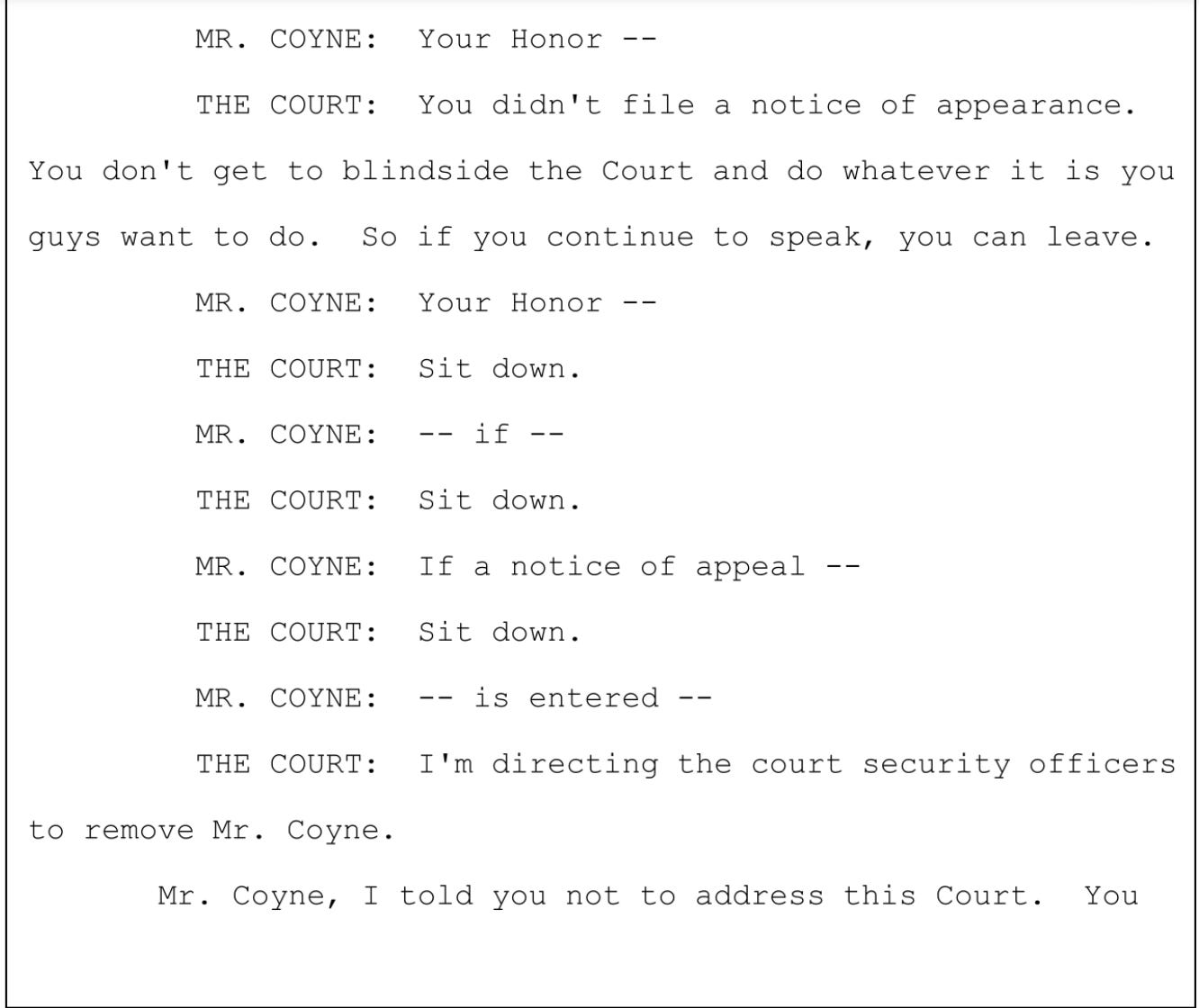
The judge ended the hearing with an order to the current leadership structure of the U.S. Attorney’s Office to appear in his courtroom for questioning.
I’ll end with Judge Quraishi’s words that are not only chilling, but aptly capture the current state of affairs with the federal government:
[Y]ou have lost the confidence and the trust of this Court. You have lost the confidence and the trust of the New Jersey legal community, and you are losing the trust and confidence of the public.
Stay tuned for a deeper dive on this and more.
This latest court decision is yet another chapter in the long-running saga over the leadership of the U.S. Attorney’s Office in New Jersey.
The press has reported that Judge Quraishi “ejected” the supervisor from the U.S. Attorney’s Office. I don’t necessarily disagree with that characterization. But upon reading the transcript, it’s clear that while the judge directed court security to remove the supervisor, the supervisor ultimately left on his own after the judge asked him to leave.