

Welcome to New Jersey Insight, a periodic newsletter to make law and politics (through a New Jersey lens) more accessible.
New Jersey created the office of the Lieutenant Governor to solve one accountability problem. In the past 36 hours, it faced a different one.
The office is only twenty years old, and its first occupant assumed the role sixteen years ago. It was meant to create an unbroken line of responsibility to the people. The framers of the office expected that the Lieutenant Governor—on a moment’s notice—could take the helm of state government when necessary and still be politically responsive to the electorate.
Now, the concern was not the absence of a successor to the chief executive, but that the current successor-in-waiting needed to go.
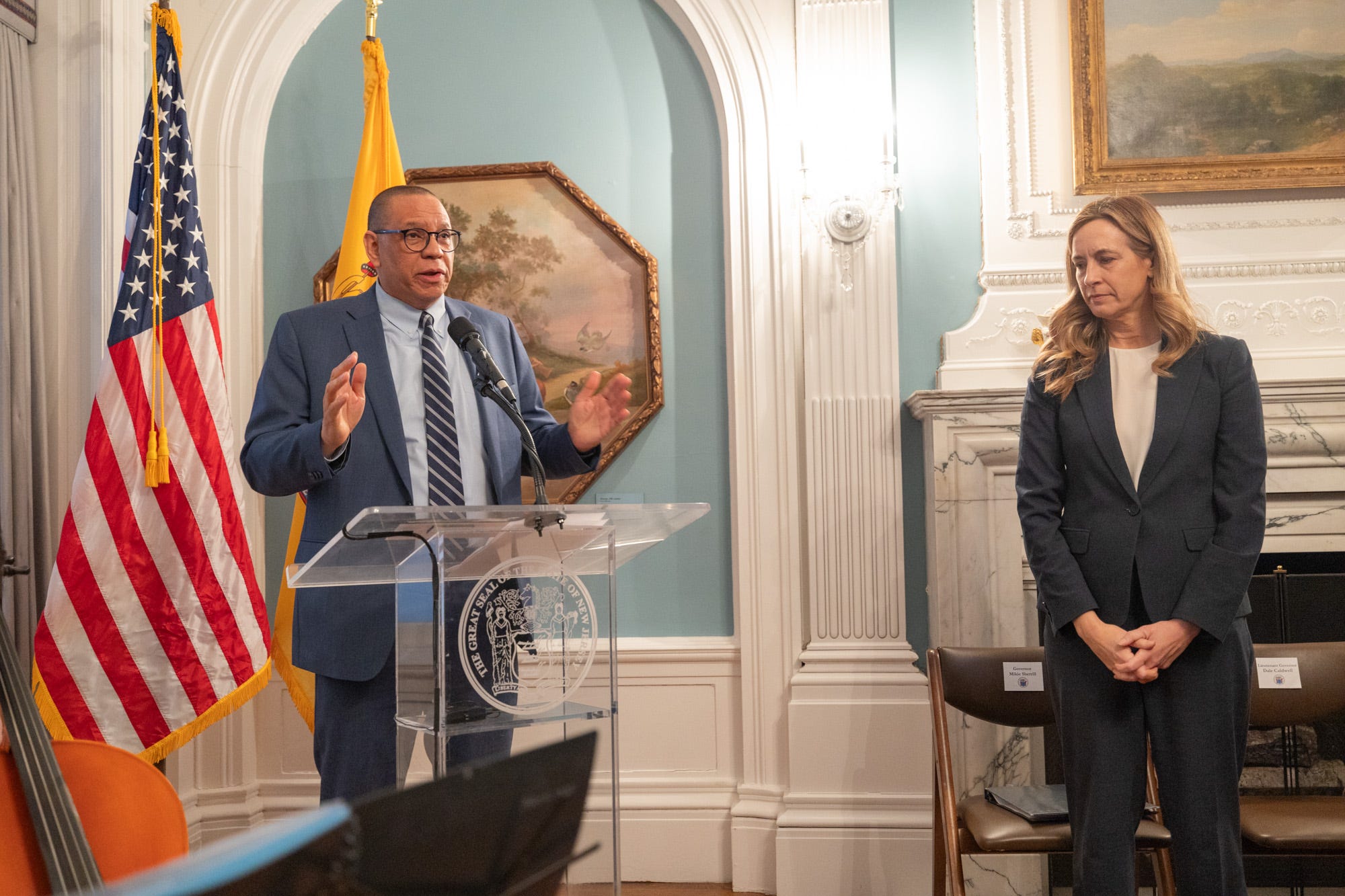
On Thursday night, Governor Mikie Sherrill released an explosive internal investigation report detailing findings of misconduct by Lt. Gov. Dale Caldwell. The report, co-authored by former attorney general Christopher Porrino, concluded that the Lt. Gov. had engaged in sexual harassment when—upon rejection of his romantic advance toward a staffer’s friend—he commented to the staffer that “you young women are looking for young sperm.” The Lt. Gov., according to the report, also acted unethically when he would bring personal guests to ticketed events without paying for them and when he sought to secure a promotion “for a state employee with whom he had a romantic relationship.”
Counsel for the Lt. Gov. denied the findings against him, but the Governor demanded his resignation—and she got it. On Friday, the Lt. Gov. resigned. Under the state constitution, the Governor has 45 days to select a successor. Speculation already abounds on possible names to be the next Lt. Gov.1
To place these events in context, it helps to recall the reason this office exists in the first place.
For most of New Jersey’s existence, it had no formal second in command. New Jersey allowed the president of the state senate to assume gubernatorial powers in the event of a governor’s absence or a vacancy. And for over 100 years, this arrangement suited the state just fine. Any absence from the governor would be brief and infrequent, and the senate president was seen as a reliable, temporary caretaker until the governor returned.
That changed in 2001. President George W. Bush nominated then-Governor Christine Todd Whitman to lead the Environmental Protection Agency. When Governor Whitman left, the senate president—Donald DiFrancesco—served as acting governor for roughly eleven months. In January 2002, normalcy was on the horizon with the election of Jim McGreevey. But in a quirk of history, upon the start of a new legislative session, Acting Governor DiFrancesco vacated the office, and in his stead, two senate co-presidents, John Bennett and Richard Codey, consecutively served as acting governors for seven days until Governor McGreevey assumed office.
But because this is New Jersey, the next scandal arrived not too long after. In 2004, Governor McGreevey resigned after his declaration on national television of being a "gay American" and the discovery that he installed his then-romantic interest, Golan Cipel, as his homeland security adviser. The senate president who became acting governor, Richard Codey, stayed in that role for fourteen months. And in that time, he served both as the leader of the state senate and as the chief executive.
These events raised separation-of-powers concerns about one officeholder serving in two political branches of government. The time had arrived, finally, for New Jersey to establish the role of Lt. Gov. The voters agreed in a referendum in 2005. It wasn’t until the election of Governor Chris Christie in 2009 that New Jersey had its first Lt. Gov., Kim Guadagno.
In our entire history, the state has only had four Lt. Governors: Kim Guadagno, Sheila Oliver,2 Tahesha Way, and Dale Caldwell. Caldwell, who was the first male to hold the office, is now the first to be engulfed by scandal, and he is the first ever to resign.
We saw the pages of history being drafted before our eyes, though none of it great. The voters created the office to guarantee a line of succession that would be responsible to the people whenever the chief executive was unavailable. But for the first time, the holder of that very office needed to be held to account. Here, Governor Sherrill exacted that accountability. The ball is now in her court, where she faces a 45-day clock to choose the next Lt. Gov. and ensure that the office continues—along with the vision of the voters who established it.
Caldwell’s resignation also created a vacancy in his other role as Secretary of State. The Governor has tapped Shirley Emehelu, a veteran of the U.S. Attorney’s Office and the New Jersey Attorney General’s Office, to serve as Acting Secretary of State. The Secretary also acts as the state’s chief elections officer, and with the midterm elections less than forty days away, the Governor correctly determined that the role needed continuity.
Lt. Gov. Oliver passed away three years ago. At the time, I remarked on her life of public service:
During my time in state service, I can’t say that I spent an extraordinary amount of time with Lt. Gov. Sheila Oliver. But the times that I did, she would always leave an indelible mark on me and on those around her. Whether it was how we can revitalize communities or encouraging our young people, who may have made mistakes in their past, to persevere, the LG would always leave us inspired. You didn’t need to know her well to know that she led a life of public service.
My heart is heavy today. My thoughts go to her family, her loved ones, and her colleagues. May she find peace, and may her family find solace in her incredible legacy.