

Welcome to New Jersey Insight, a periodic newsletter to make law and politics (through a New Jersey lens) more accessible.
On Saturday evening in Washington, DC, an attempted attack occurred during a gathering of the Nation’s leaders and members of the national press corps. One U.S. Secret Service officer sustained a gunshot, but his bulletproof gear protected him. No other injuries were reported. The President, the Vice President, members of the Cabinet, and members of the press were safe.
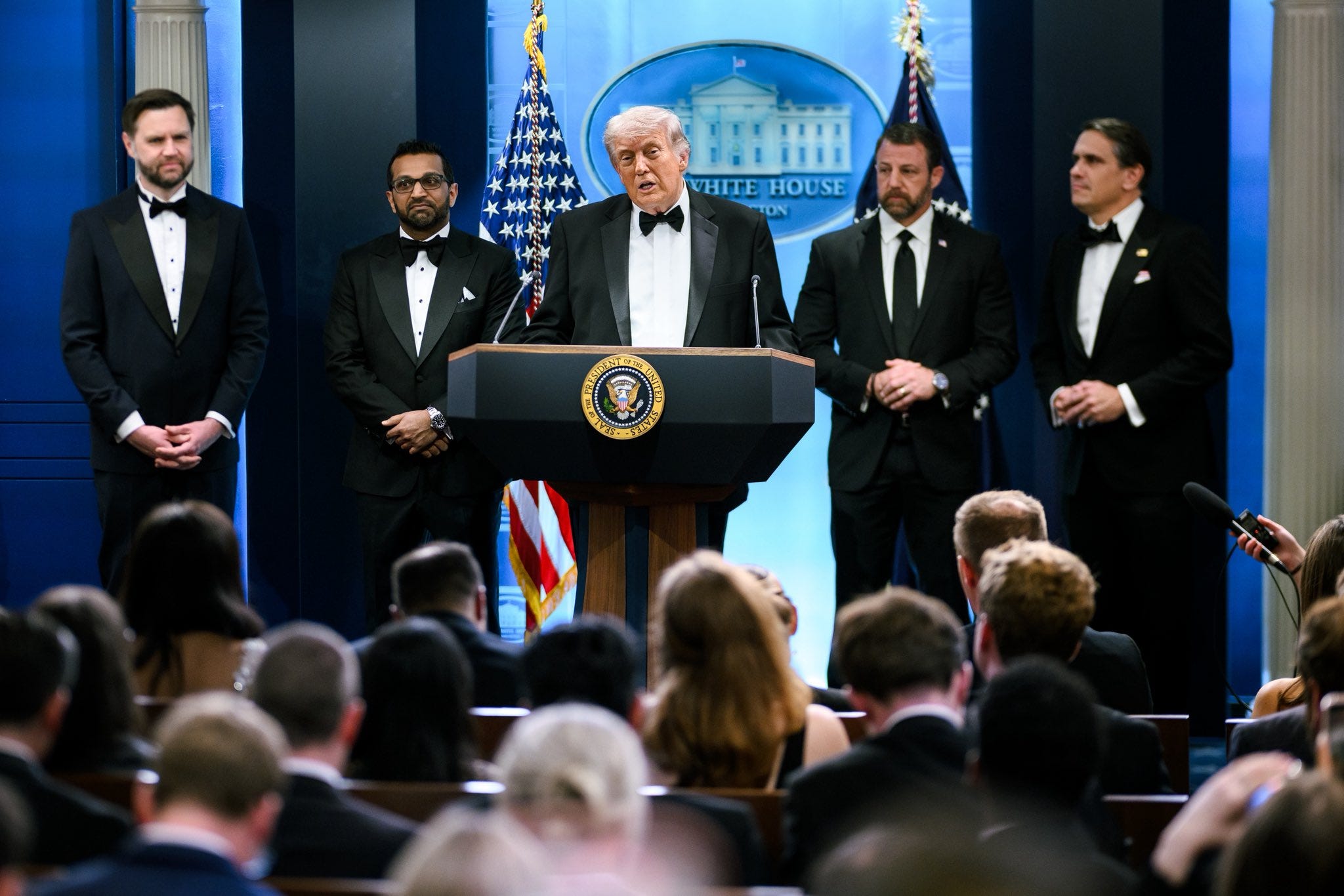
Federal law enforcement have detained the perpetrator and will charge him with firearms offenses and attacking a federal officer, with more charges likely to follow. The investigation remains ongoing. But on Sunday morning, Acting U.S. Attorney General Todd Blanche conveyed that the President and members of his Administration were likely the targets. By Sunday evening, the press reported that the perpetrator left a note exhibiting his anger with the Administration.
The event raised the troubling prospect that the attacker likely intended to carry out political violence. Such acts have occurred much too frequently just in the past few years.1 These acts are not only tragic and horrific, but they also have an impact far beyond the immediate victims. Like hate crimes, political violence ripples through entire communities. It risks destabilizing our democratic institutions and devolving our political disputes into widespread violent confrontations. Instead of the peaceful resolution of conflicts, we would be left with fear and the power of might over right.
Unfortunately, our history is replete with examples of political violence. The frequency as of late, however, should ring the alarm. Many policymakers are exploring ways to address the uptick. Some, like the governor of Utah and the former governor of New Jersey, emphasized civil discourse during their tenures and promoted how to “disagree better.” Others are exploring legislation, including increasing criminal penalties.
For example, a bipartisan bill to criminalize political violence is pending in the New Jersey Legislature. If an individual commits or attempts to commit an underlying crime (like murder, kidnapping, or assault) motivated by political animus, the bill would increase the punishment of that crime. The legislation would also create the Political Violence Review Board, which would review past instances of political violence and issue a report with its findings. It further imposes training on the subject for all law enforcement officers in the state.
It’s a start. These times, however, call for an all-of-the-above approach and a shift in political attitudes. Leaders at all levels ought to be mindful of their audience and their rhetoric, especially language that some may grasp to dehumanize others. Political opponents may be adversaries in the realm of politics, but they need not be enemies. At bottom, how we conduct ourselves, and how we treat others, matter.
Last fall, I moderated a panel at a bar association conference with dispute resolution professionals that focused on practical techniques to have productive dialogue. How can we lower the temperature, for example, and turn contentious conversations into opportunities for progress. From that panel, my favorite takeaway was how to listen better. Not listening in preparation to respond and trounce (like most seasoned litigators are trained to do), but listening for the sake of listening. And learning.
As a Nation, we need to listen more. And disagree better.
Just in the past few years, some examples (though not exhaustive) include:
The attack on the U.S. Capitol (2021);
The attack on then-Speaker Nancy Pelosi’s husband (2022);
The attempted assassination of Justice Brett Kavanaugh (2022);
The shooting and assassination attempts of then-presidential candidate Donald Trump (2024);
The arson of Pennsylvania Governor Josh Shapiro’s residence (2025);
The assassination of Minnesota Rep. Melissa Hortman and the attack on Minnesota Sen. John Hoffman (2025); and
The assassination of Charlie Kirk (2025).
I would be remiss if I did not mention the rising level of attacks and threats against the judiciary.
Thanks. But I admit I am weary of punishments that need courts to divine the motive behind thr crime (I'm similarly weary of hate crime laws) ... not because I don't despise hate-based and politically-based violence (I do!) But because 1) its really hard to figure out what motivates someone, and 2) by saying one act of violence is worse, then it's also saying the other act of violence is better. I want the punishment to fit the crime, not the motivation of the criminal. But in the spirit of your post, I'm happy to listen and consider other perspectives!